Tamara Wirth Steps Into Her Own Sound with Esoteric Reality
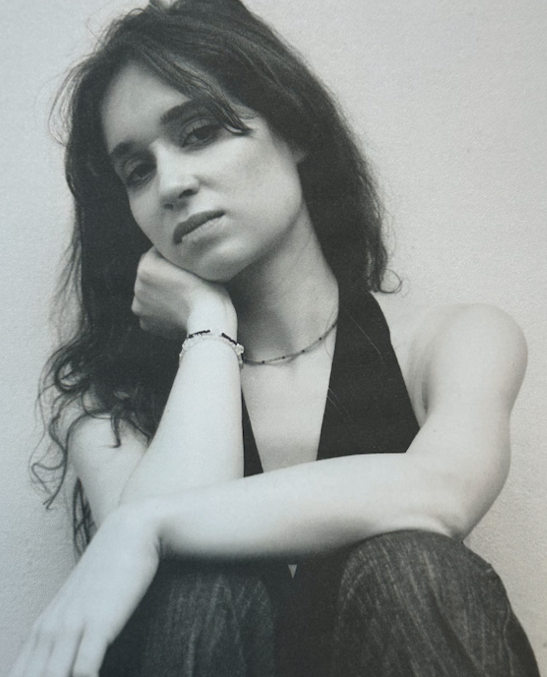
For an emerging artist, a debut release is more than a collection of tracks. It is an opportunity to establish a point of view, to reveal the experiences and ideas that have shaped their relationship with music, and to begin defining the language they want to speak with. With Esoteric Reality, Tamara Wirth takes that first step into her own sound.
The three-track EP, released through LEHMANN Musik on 2 October 2026, brings together “I”, “Spirit” and “Reality” in a project centred on identity, time, belonging and personal discovery. Rather than presenting electronic music as a purely functional experience, Wirth approaches the dancefloor as a space where personal and collective experiences can meet.
The result is a debut that feels less concerned with making a definitive statement than with documenting a process.
At the heart of Esoteric Reality is the idea of finding a language of one’s own. For Wirth, that language is built through rhythm, instinct and immersion, drawing from experiences both on and off the dancefloor. The EP becomes a way of translating those experiences into something that can be shared, while retaining the personal quality that gave rise to them.
That balance between intimacy and collectivity is one of the project’s most intriguing elements.
Dance music is often associated with escape: stepping away from everyday routines, entering a different environment and allowing the music to take control. But the dancefloor can also be a place of recognition. It can make people feel connected, understood or temporarily part of something larger than themselves.
Wirth’s approach appears to embrace both sides of that experience.
Her search for belonging is not presented as a straightforward journey towards a final destination. Instead, uncertainty remains an essential part of the process. The EP is described as an ongoing attempt to discover, show and understand the artist herself, suggesting that music becomes a tool for exploration rather than simply a reflection of something already known.
That makes the title Esoteric Reality particularly appropriate.
The phrase brings together two apparently opposing ideas. The esoteric implies something hidden, mysterious or internal; reality suggests the physical and immediately observable world. Wirth places her music somewhere between those two concepts, exploring the distance between what we experience internally and what exists around us.
The three track titles reinforce that movement.
“I” begins with the individual. It is the most direct expression of identity, establishing the self as the starting point for the EP. “Spirit” then moves towards something less tangible, suggesting emotion, instinct and the inner world. “Reality” completes the sequence by returning to the external world.
It is a simple structure, but one that leaves plenty of room for interpretation.
Rather than forcing the listener into a specific narrative, Wirth creates an open framework. The personal experiences behind the record are hers, but the questions they raise are universal: Who are we? Where do we belong? How much of our identity changes depending on the spaces we inhabit? And can music help us understand those changes?
These questions are particularly relevant to an artist beginning to establish a presence within electronic music.
There is a temptation for new artists to define themselves through labels, genres and easily recognisable references. Wirth’s debut takes a more fluid approach. The emphasis is placed on instinct, discovery and the gradual construction of an individual language.
That sense of openness gives Esoteric Reality a strong sense of potential.
A three-track EP cannot contain everything an artist might want to say, nor should it. Its role is to create a first impression and establish a direction. In Wirth’s case, that direction points towards music that can operate simultaneously as a physical experience and an emotional one.
The dancefloor remains important, but it is only part of the story.
The experiences that happen away from the club also feed into the record, allowing Wirth to treat electronic music as an extension of everyday life rather than a separate world. Rhythm becomes a way of connecting those experiences, turning private moments into something that can eventually be experienced collectively.
With Esoteric Reality, Tamara Wirth therefore introduces herself not as an artist with all the answers, but as one willing to explore the questions.
“I”, “Spirit” and “Reality” form the first chapter of that exploration. Together, they establish a world built around movement, introspection and uncertainty — a world that Wirth is only beginning to reveal.
And perhaps that is exactly what a debut should do: not close the conversation, but give listeners a reason to keep listening.
![Goeran Meyer — Unfold [MYR45]](https://static.wixstatic.com/media/94cb03_85e8c20e394e498a86f9bc34d89a147f~mv2.png/v1/fill/w_678,h_676,al_c,q_90,enc_avif,quality_auto/94cb03_85e8c20e394e498a86f9bc34d89a147f~mv2.png)


Comentarios